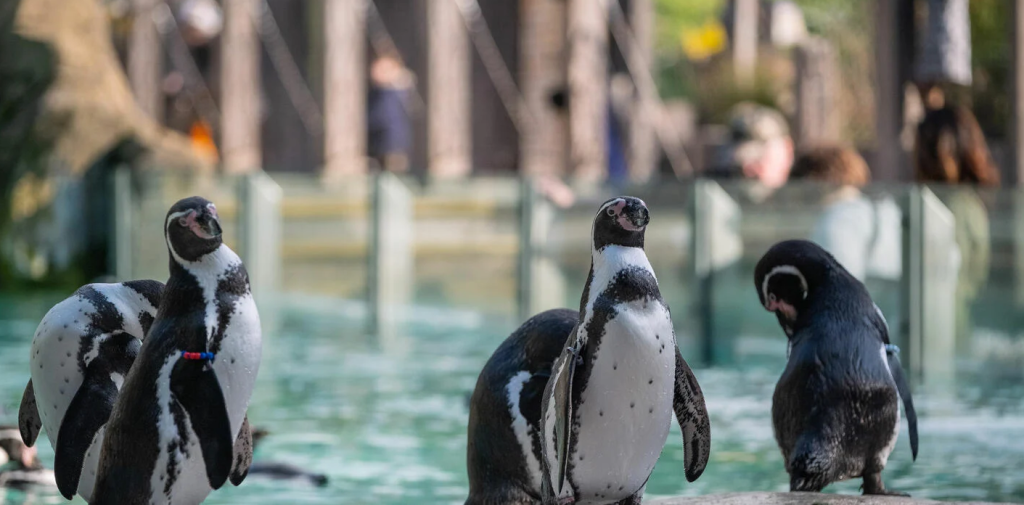
Around the same time that in China a certain virus may have jumped from bats to humans, I found myself 20 steps from the penguins at London Zoo. It was late 2019, and I was leading a digital roadmapping workshop with Zoological Society London, the wildlife preservation charity that also runs London Zoo, and Whipsnade Zoo outside of London.
Charity and zoos shared one website and url. The site had been around for years and looked the part. It wasn’t easy to use, and navigation was particularly hard. Not only because there’s a lot to tell about one charity and two zoos, but also because users got easily confused when clicking a link and ending up at another part of ZSL. On top of that, the ticketing system was out of date, making integrated marketing and sales difficult.
So with my colleagues at Deeson (now TPXimpact) I made a roadmap that included changing CRM and ticketing, and a website rebuild.
Flash forward
Two and a half years later, when the Covid 19 pandemic seemed to subside, I finally led the discovery for that new website. I looked at audience research ZSL had done, and found out:
- There’s little overlap between people who support wildlife charities, and people who buy tickets and memberships for zoos.
- London Zoo and Whipsnade Zoo have mostly different audiences. One is a city zoo, attracting city dwellers and international tourists for a few hours, whereas the other is visited by suburban families and holiday makers for a full day.
In other words, one brand offered three distinct propositions to different audiences with limited overlap between them. That insight led to a recommendation to split up the website. This would make each site present one proposition more convincingly and make navigation easier.
But how about SEO and Google?
Good question.
Like many sites that exist for a long time, zsl.org had quite a high pagerank. But people clicking from Google’s SRP (search result page) to ZSL often found themselves on a page that didn’t match what they were looking for. Also, in some places Google would only show one of the zoos, not both.
Separate websites makes SEO more effective – with each site building up authority with Google on search terms that actually matched its proposition (apparently ‘niche expertise’ makes up 14% of page ranking).
So after making a content migration and launch plan, including a detailed plan for redirects to maintain current ranking, the new websites were launched and with good success.
One more thing – three websites, isn’t that a lot more work?
Yes, we didn’t want to confront ZSL with having to maintain multiple platforms. So I recommended building the new websites on one technical platform, and one design system. You can see this in the finished product: pages on the three sites are built (in Drupal) from the same components, with identical size and behaviour, but with different colour schemes.
If you haven’t already, do have a look at ZSL.org , LondonZoo.org and WhipsnadeZoo.org. The website won a 2023 BIMA Award (Bronze) for User-centric digital transformation – see there for full team credits.
 van der Heijden digital strategy consultancy
Leave a comment